The 2026 Set-Aside Tracker
Log what you get paid. Know exactly what to hold back. Never get surprised by a quarterly payment. One spreadsheet for Excel and Google Sheets, built on the real 2026 federal and state figures.
Checkout by Gumroad. Files delivered by email instantly. Sales tax handled at checkout.
What is inside
Setup
Filing status, state, expected 1099 income and expenses, W-2 wages and withholding for your household, health insurance and retirement contributions, last year's tax for the safe harbor, and the balance already in your tax savings. Ten minutes, once.
Dashboard
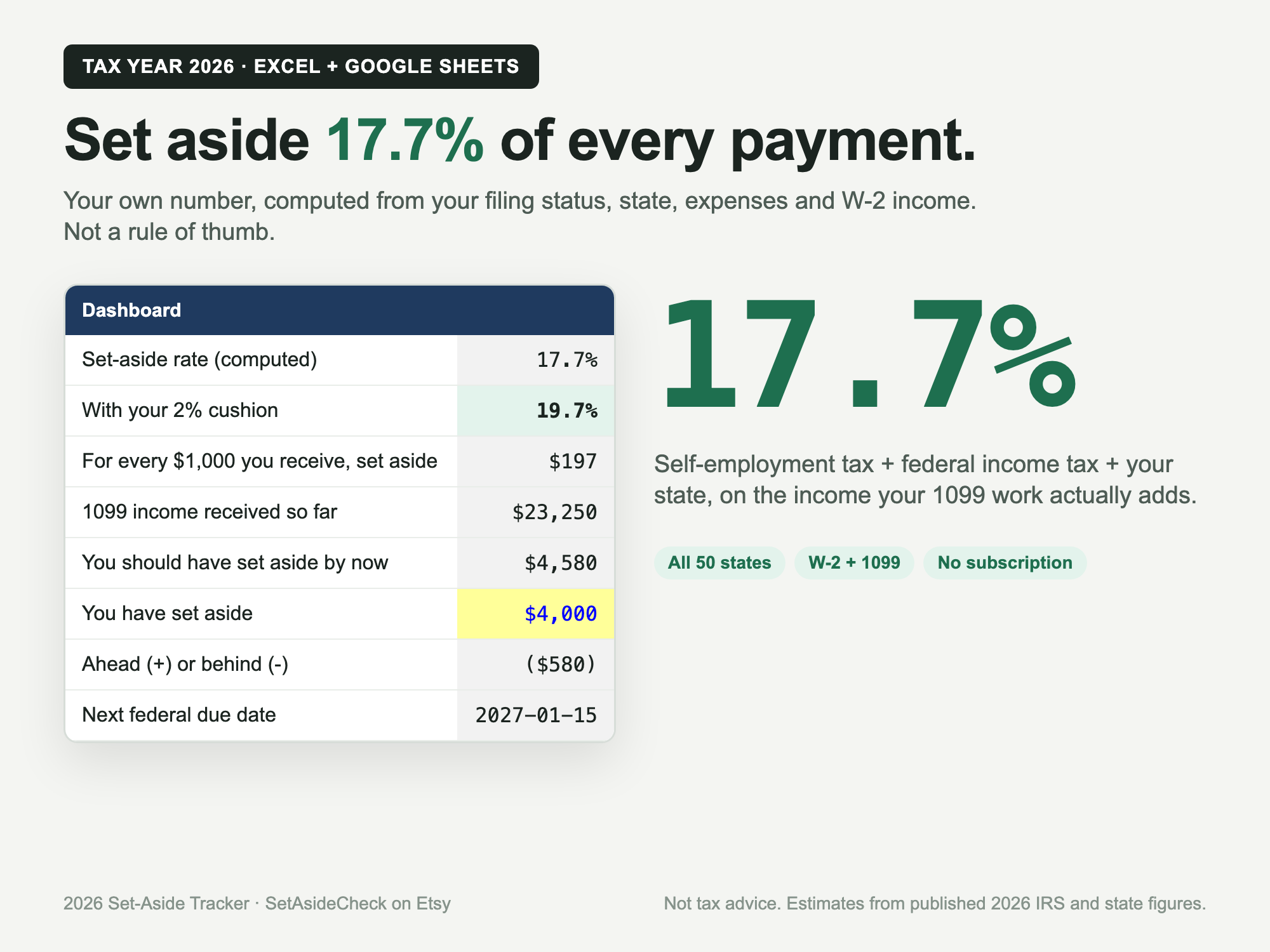
Your set-aside rate with a cushion you choose, what you should have saved by now against what you have, the next IRS due date and the suggested payment, and the full-year picture: self-employment tax, federal income tax, state and local, what you keep.
Income Log, Expense Log, Mileage Log
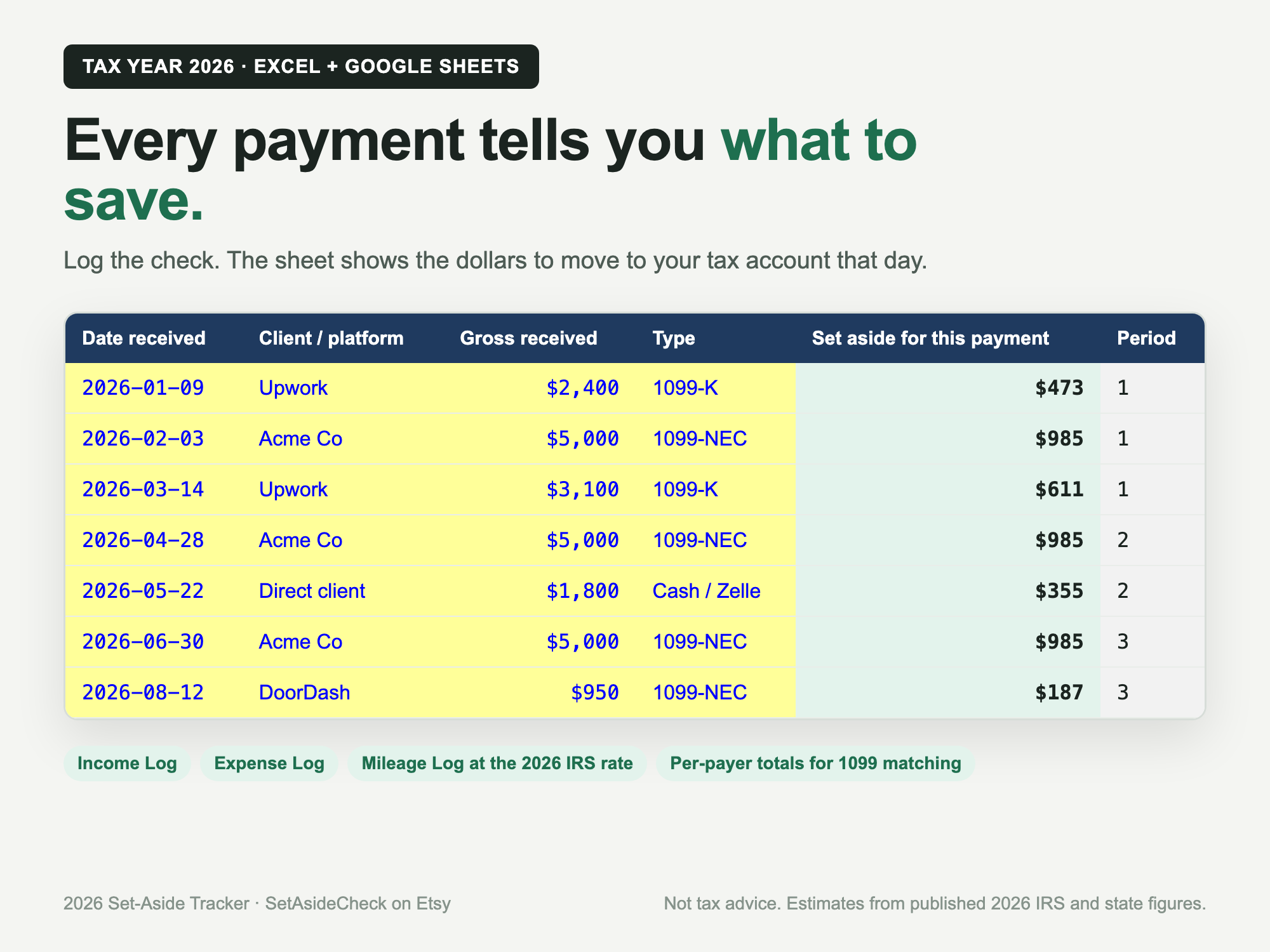
One row per payment; each row shows the dollars to move to savings. Schedule C categories for expenses. Business miles at the IRS rate applied by date (72.5 cents through June 30, 2026, 76 cents from July 1). Per-payer totals for matching your 1099-NEC forms.
Quarterly
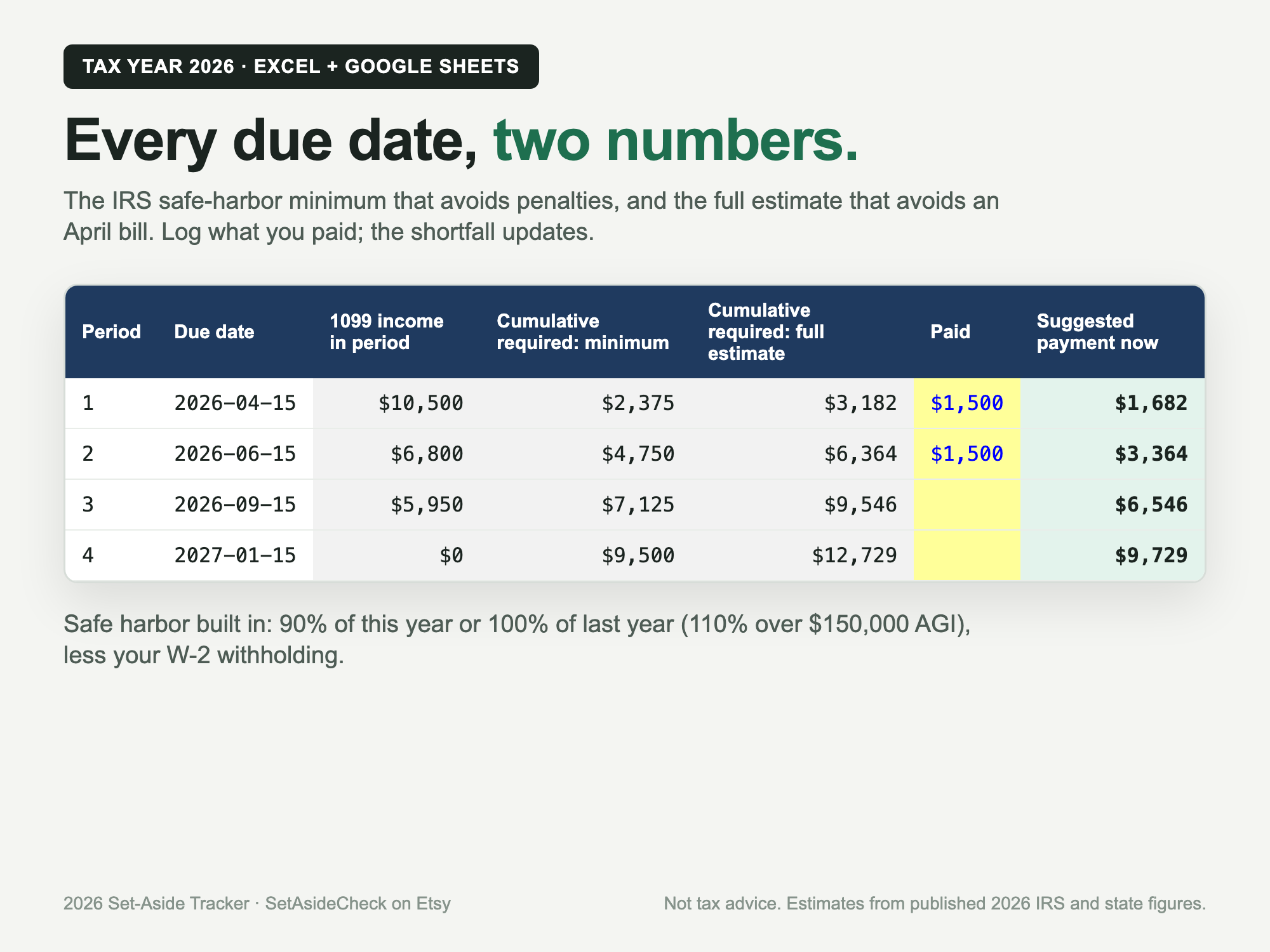
The four 2026 periods with due dates, income and expenses in each, the cumulative safe-harbor minimum and the cumulative full estimate, a payment log, and the shortfall. Paying the minimum avoids penalties; paying the full estimate avoids a balance due in April.
Tax Calc
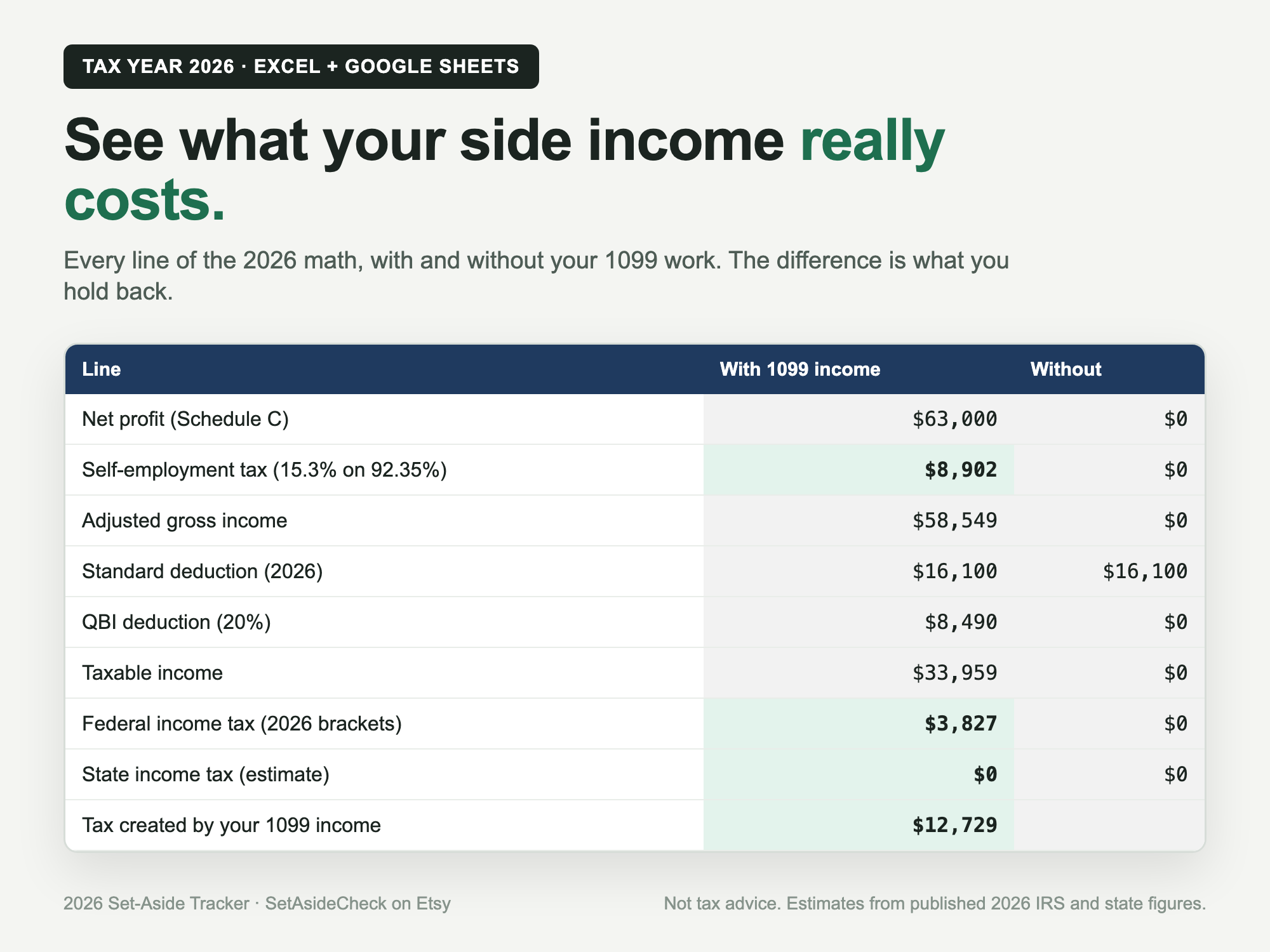
Every line of the calculation side by side, with and without your 1099 income. Net earnings, Social Security and Medicare portions, the half-SE deduction, AGI, standard deduction, the 20% QBI deduction with its 2026 phase-in and $400 minimum, taxable income, federal brackets, state brackets, local tax. The difference between the two columns is the tax your 1099 work creates, and that is what your set-aside rate is built from.
Tables
All 2026 figures with their sources: Rev. Proc. 2025-32 brackets and standard deductions, the $184,500 Social Security wage base, QBI thresholds, IRS due dates, and single-filer brackets for all 50 states and DC. Visible, editable, nothing hidden.
Who it is for
Freelancers, consultants and contractors on 1099-NEC. Side hustlers with a W-2 job, which is the case most templates ignore and where rules of thumb go most wrong. Gig workers on 1099-K platforms. Realtors, coaches, creators, and anyone paid without withholding.
What it is not
It is not tax advice and it does not know your full situation. State tax is an estimate using single-filer brackets (doubled for joint filers) on federal taxable income, so it usually runs a little high. Itemized deductions and credits are single override cells. The new tips, overtime and senior deductions, S-corp elections, depreciation and household employment taxes are not modeled. If those apply to you, treat the set-aside rate as a floor and confirm with a professional.
Details
One .xlsx file plus a one-page quick start PDF. Opens in Excel 2016 or later; in Google Sheets use File, Import, Upload. No macros. Free updates for tax year 2026 if the IRS or a state changes a figure. Single-user license.